
Section 8: Ethical, Legal, and Professional Issues provides a focused review of the ethical standards, legal requirements, and professional responsibilities psychologists must understand for the EPPP. This section prepares you to recognize ethical dilemmas, apply professional standards, and determine the most appropriate course of action in complex clinical situations.
You will review essential topics including informed consent, confidentiality and privilege, mandated reporting, multiple relationships, professional boundaries, competence, record keeping, assessment ethics, supervision, consultation, telepsychology, advertising, fees, termination, and ethical decision-making. You will also examine the relationship between ethical standards and legal requirements and learn what to do when they appear to conflict.
Rather than simply memorizing ethics codes and rules, this section emphasizes applying ethical principles to EPPP-style scenarios. You will learn to identify the central ethical issue, distinguish between ethical and legal obligations, recognize exceptions to confidentiality, and select the best, most ethical response when several answer choices may initially appear correct.
The goal is to strengthen your ethical reasoning and help you approach ethics questions with a clear, systematic decision-making process that supports competent, responsible, and professional psychological practice.

Section 7: Research Methods and Statistics provides a focused review of the research principles and statistical concepts you need to confidently answer EPPP questions. This section teaches you how psychological research is designed, conducted, analyzed, and interpreted, with an emphasis on applying research findings to evidence-based psychological practice.
You will review essential topics including research design, experimental and quasi-experimental methods, sampling, measurement, reliability and validity, descriptive and inferential statistics, probability, statistical significance, effect size, correlation, and research ethics. You will also learn how to identify variables, interpret study results, evaluate the strength of research findings, and recognize common threats to validity.
Rather than simply memorizing formulas and definitions, this section focuses on helping you understand what statistical results actually mean and recognize the concepts being tested in EPPP-style scenarios. The goal is to make research methods and statistics more approachable while strengthening your ability to evaluate evidence, interpret data, and select the best answer on exam day.
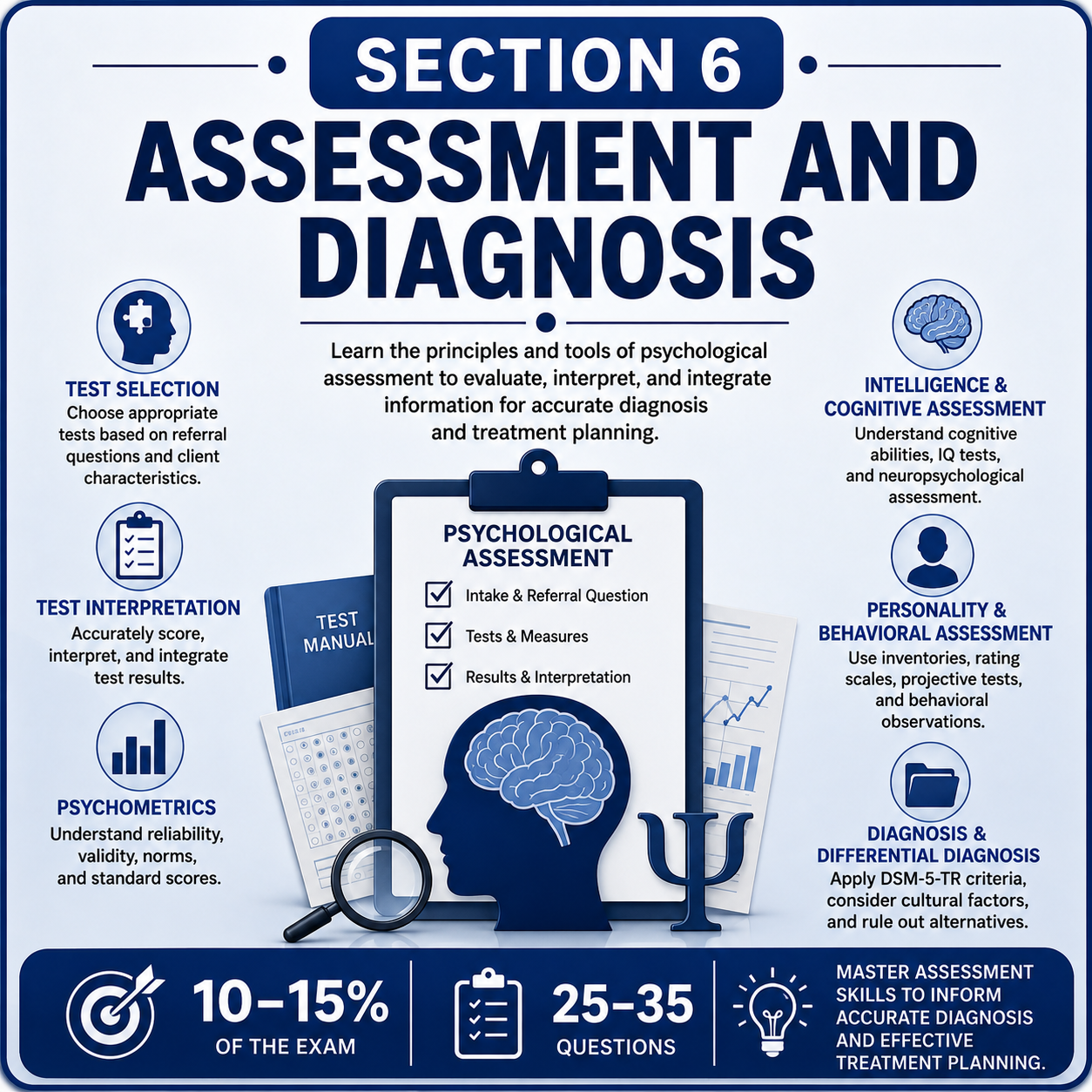
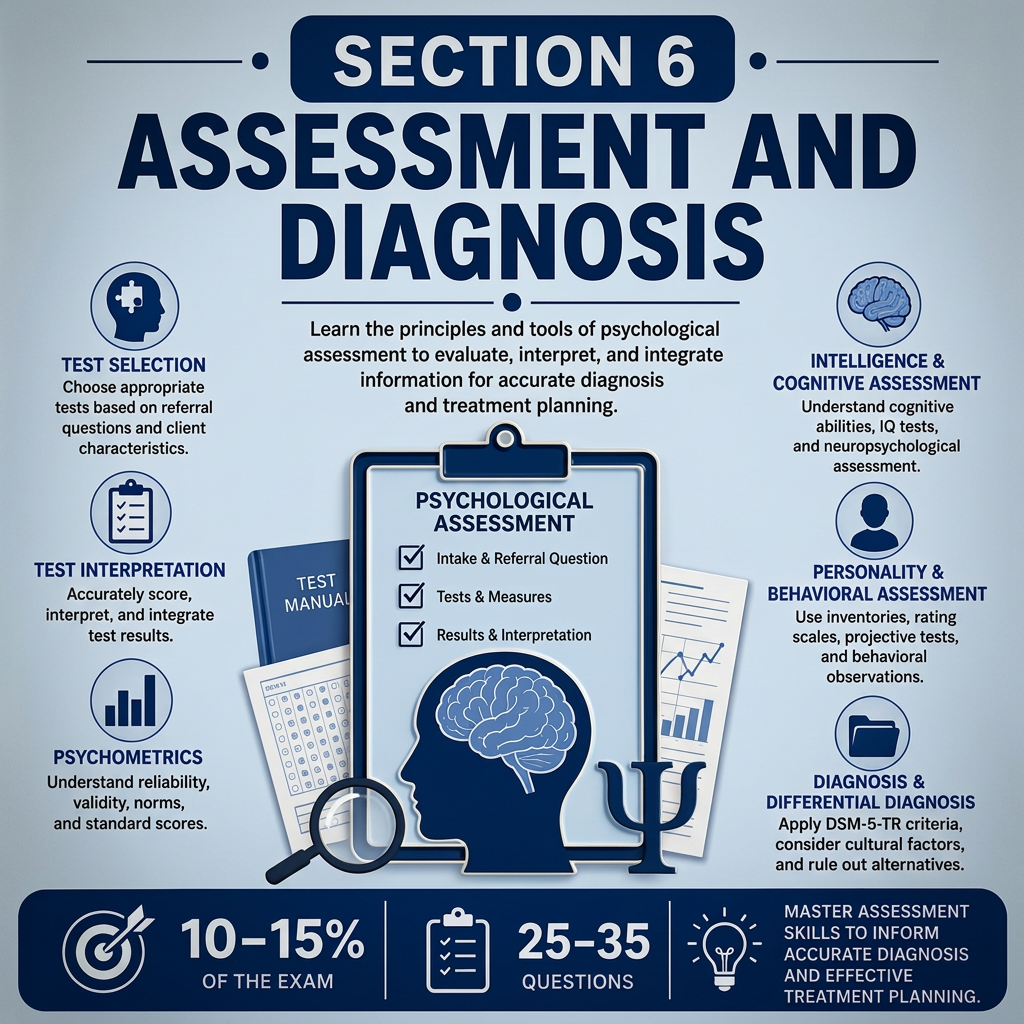
Section 6: Assessment and Diagnosis provides a comprehensive review of the principles and tools used to evaluate psychological functioning and make informed diagnostic decisions. This section prepares you to understand how psychologists select, administer, score, interpret, and integrate assessment information in clinical practice.
You will review essential topics including test selection and interpretation, psychometrics, reliability and validity, norms and standard scores, intelligence and cognitive assessment, personality and behavioral assessment, and diagnosis and differential diagnosis. Special attention is given to applying DSM-5-TR criteria, considering cultural and contextual factors, and distinguishing between disorders with similar presentations.
The goal is to help you move beyond memorization and develop the ability to apply assessment concepts to EPPP-style clinical scenarios, select appropriate assessment methods, interpret findings accurately, and use assessment data to support sound diagnosis and effective treatment planning.
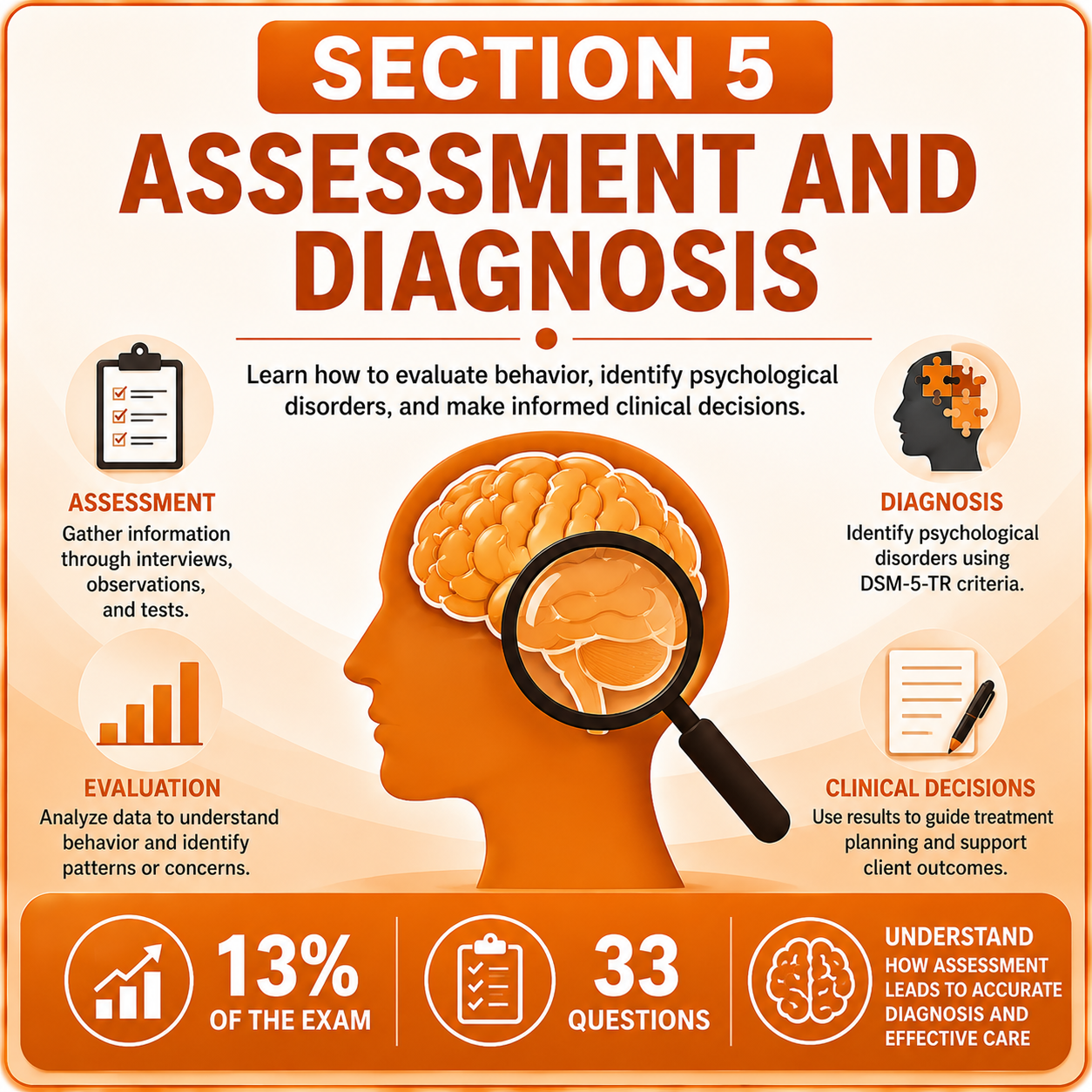
Section Study Guide 5: Assessment and Diagnosis provides a focused review of essential EPPP concepts related to psychological assessment, testing, and diagnosis. Topics include reliability and validity, test construction, intelligence and personality assessment, clinical interviewing, diagnostic decision-making, DSM-5-TR concepts, differential diagnosis, and interpretation of assessment results. Designed to strengthen your understanding of key assessment principles and prepare you for exam-style questions.
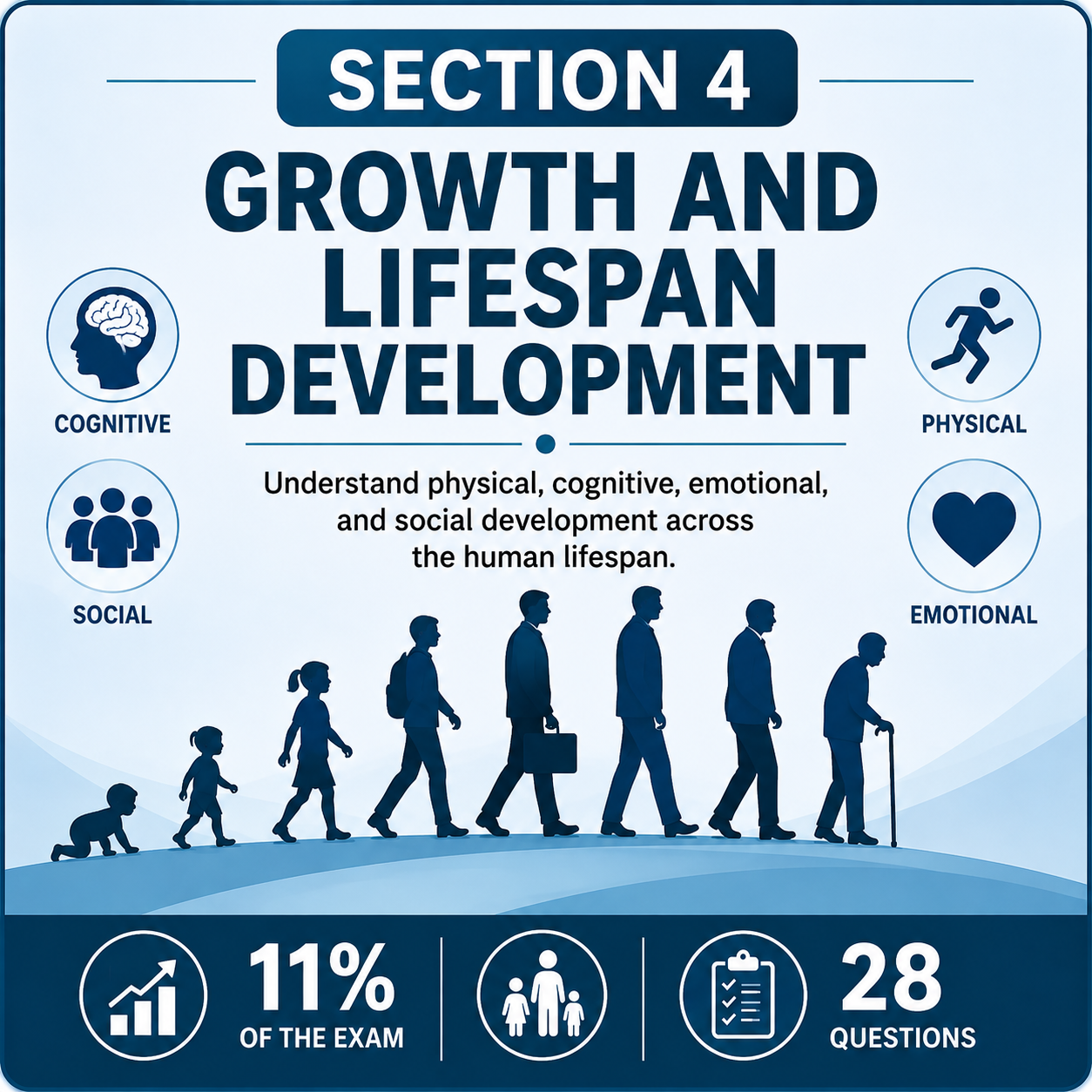
EPPP Section Study Guide 4: Growth and Lifespan Development provides a focused review of key EPPP concepts related to human development across the lifespan. Topics include cognitive, emotional, social, and physical development; major developmental theories; attachment; temperament; identity development; aging; and important developmental milestones. Designed to help you review high-yield concepts and strengthen your preparation for the EPPP.
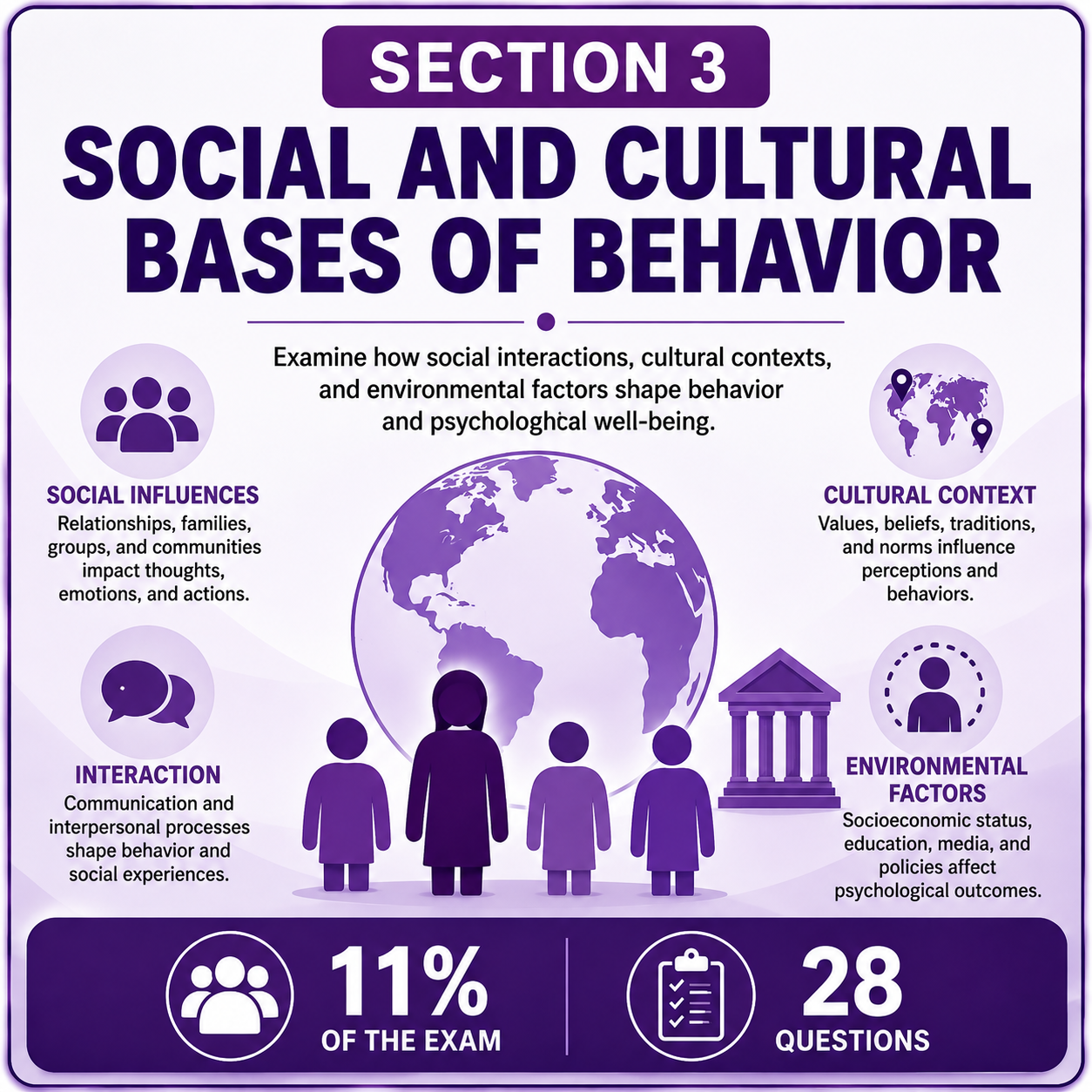
Section Study Guide 3: Social and Cultural Bases of Behavior provides a focused review of key EPPP concepts related to social influences, interpersonal relationships, group behavior, and cultural factors that shape human behavior. Topics include social cognition, attitudes, prejudice and discrimination, conformity, group dynamics, interpersonal attraction, aggression, prosocial behavior, multicultural competence, and diversity. Designed to reinforce high-yield concepts and prepare you for EPPP-style questions.
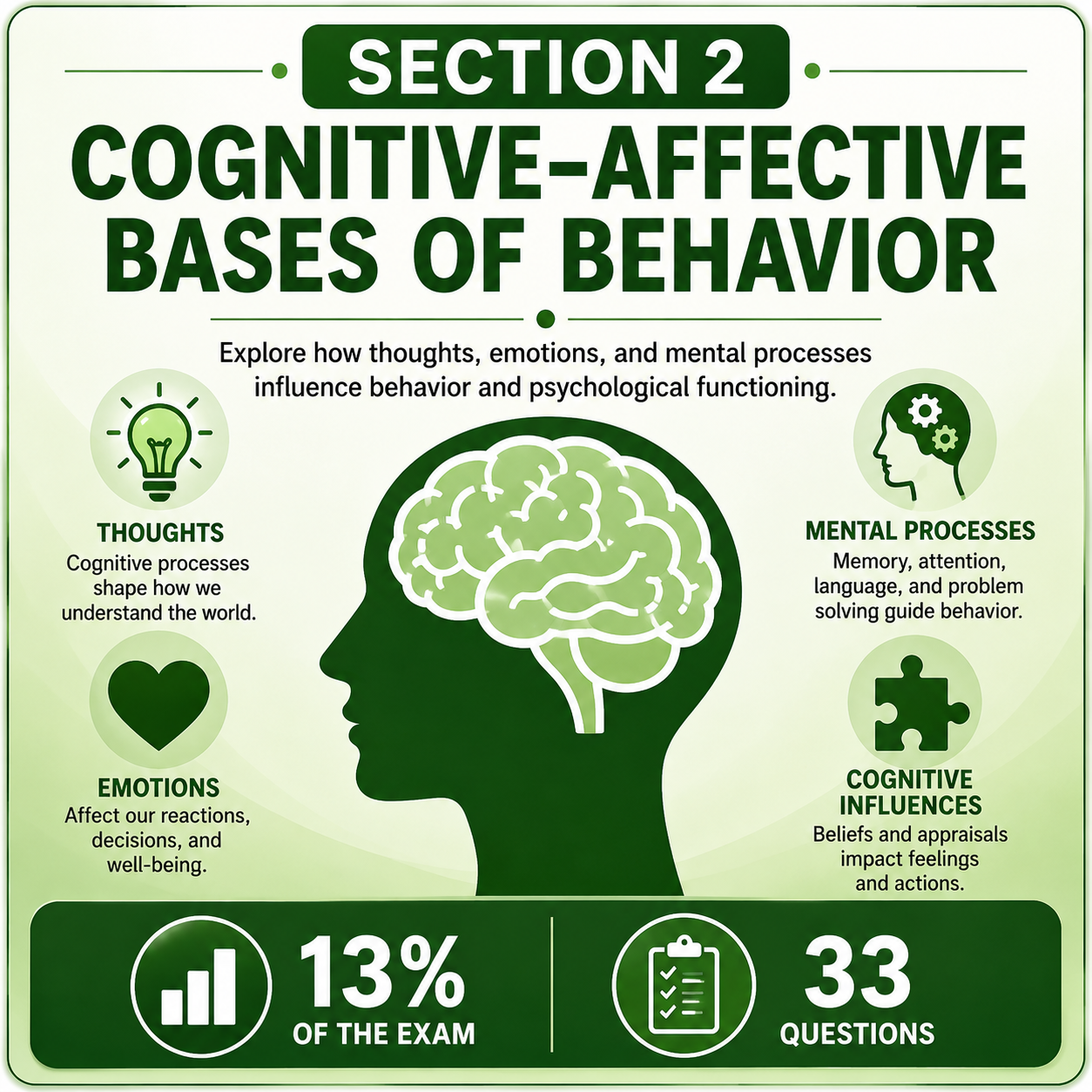
Section Study Guide 2: Cognitive-Affective Bases of Behavior provides a focused review of essential EPPP concepts related to cognition, emotion, learning, memory, and motivation. Topics include attention, perception, memory processes, problem-solving, decision-making, language, intelligence, learning theories, motivation, and emotional processes. Designed to reinforce high-yield concepts, strengthen understanding, and prepare you for EPPP-style questions.
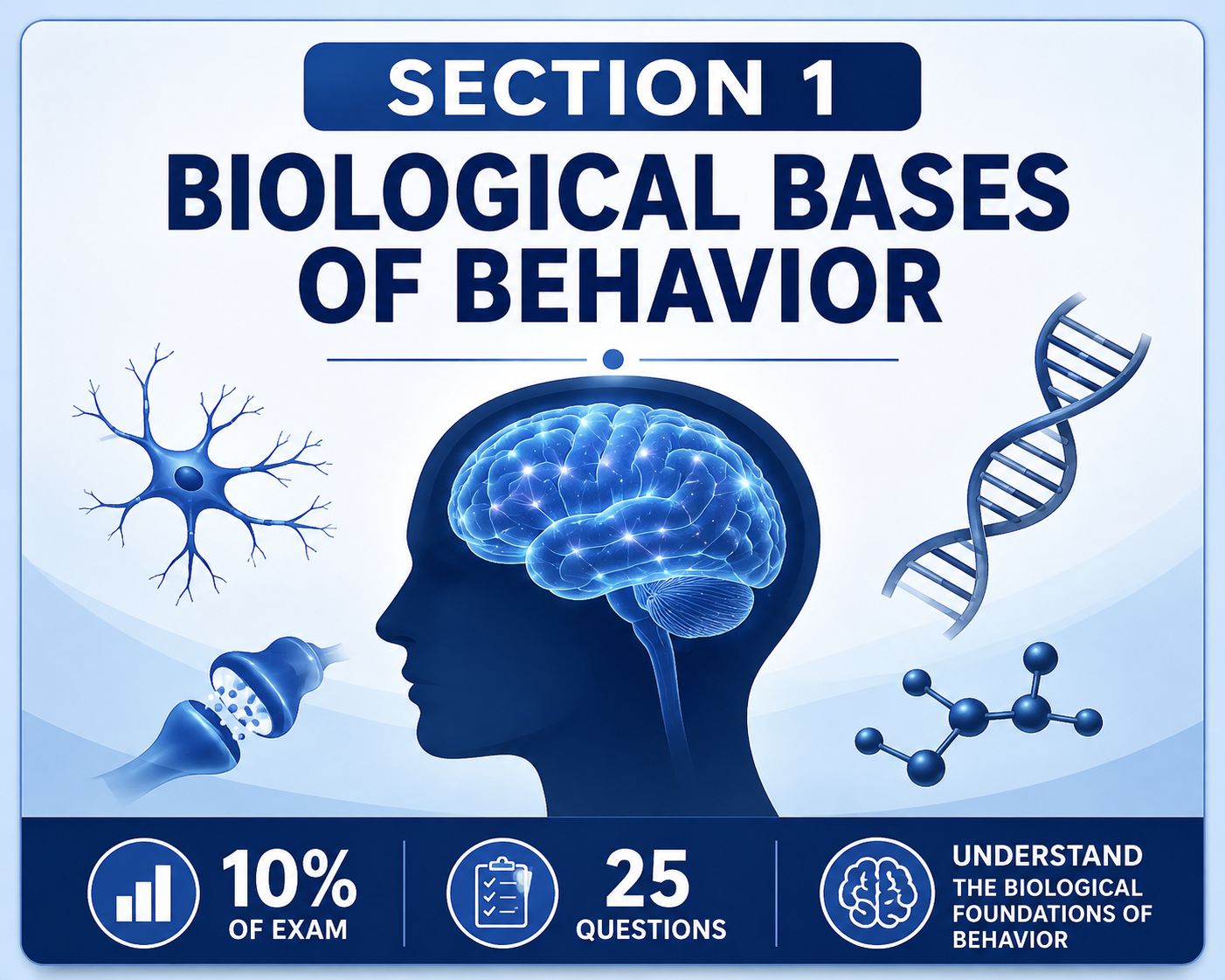
Section Study Guide 1: Biological Bases of Behavior provides a focused review of essential EPPP concepts related to the biological foundations of human behavior. Topics include neuroanatomy, brain function, neurotransmitters, the nervous and endocrine systems, genetics, psychopharmacology, sleep, and biological influences on behavior and mental health. Designed to reinforce high-yield concepts and prepare you for EPPP-style questions.
No results match your search. Try removing a few filters.